Showing posts with label Firewall. Show all posts

Saturday, October 31, 2020

9 Tips to Choose the Best Antivirus | Free Antivirus

Are you looking for the best antivirus or the best security solution for the IT maintenance of your SME? There are so many options on the market that you may not know what to choose. Surely you have heard thousands of times how important it is to have an antivirus, but you may not know what criteria it has to meet to achieve the best security for your company.

Choose the Best Antivirus

On some occasions, we have talked about the importance of making backup copies as the safest method to protect your company's information.

Today we are going to guide you in the most important aspects that you

Today we are going to guide you in the most important aspects that you have to take into account to choose the best antivirus option for your SME.

With more than a quarter of a million new malicious programs being detected every day, it is clear that everyone needs the protection of a good antivirus product. Having it will not guarantee us to be free from threats, but we will make it more difficult.

It doesn't matter if you work on Windows, Android, or macOS: there is malware that makes its way to your computer. But what kind of antivirus software should you get? Will you have to pay for it, or is the free antivirus good enough? Is anti-malware software the same as anti-virus software? Why are there so many different types of antivirus software, even from just one brand? And does the use of antivirus software pose a risk to computer equipment?

The answers to all these questions are complicated, but we are going to try to give you some basic advice while you decide on the best protection for your SME IT.

1. A Free Antivirus That Offers Good Protection, but Pay Offers More Features

Some free antivirus products will protect your computer systems extremely well from malware. But paid products tend to have a lot more extra features, especially on Windows. You just have to keep in mind that in most cases you will have to spend an annual subscription. Most people tend to go for less expensive products, and while this is a good general approach, it is not always the best. In the case of security products, that means looking for the cheapest product that meets your needs and offers the protection you need. That product might not be the least expensive on the market. On the other hand, imagine how much it will cost you if you buy a bargain security product that cannot protect your personal files against ransomware threats.

2. Look for a Light System Load

It is true that any antivirus program will use up some of your computer's resources, but a good antivirus program should keep your system free of malware without significantly slowing down your system's performance. In testing, the best antivirus software is hardly a drag on performance.

3. A Near-perfect Detection Rate

Since the role of antivirus software is to detect threats, it should do so flawlessly. Seek certification from a respected third-party testing organization.

You will need to ensure that your antivirus software stops more than 95% of malware, whether it is common malware or new malware. But make sure that the detection rate is not accompanied by a high rate of false positives, which are benign files mistakenly identified as malware.

4. An Intuitive Interface

Because antivirus software can be customized, it is important that the interface guides users through the various settings.

5. Daily Updates

Provide up-to-date protection. An antivirus solution that uses old and outdated malware definitions is a weak product. Viruses continually evolve, they never stop, so antivirus must do that too. A good antivirus is a product that is constantly updated, several times a day.

6. Consider the Reputation

This may seem a bit conservative, but in the IT security market, reputation matters. Buying and using a security product from a reputable company is usually a safer bet than jumping in with a security product from an unknown company. Good security solutions tend to stay good as time goes on.

7. Antivirus Alone or Security Suite?

Antivirus software comes as a standalone program, but you can also purchase it as part of a comprehensive security suite. Security suites, covered in our separate report on Internet security software, are more expensive, but include a range of protections, with antivirus, antispyware and antispam programs, identity theft protection, firewalls, and parental controls. 

8. Check the System Requirements

Make sure the antivirus program you choose works with your Windows or Mac operating system. If you have an older computer, a large antivirus software program can consume a large percentage of your computing power and may have compatibility issues.

9. Avoid Conflicts

Antivirus software rarely works very well with similar products from different vendors. Before installing third-party software, completely uninstall any pre-existing security software.

Wednesday, October 28, 2020

Cybersecurity Tips for Business | Use Cloud Antivirus Service

The Internet is constantly growing and improving, thanks to this we can now communicate freely with people all over the world. With the spread of Wi-Fi, we began to create devices that also connect to the Internet by transmitting data over the network. This is great, but the flip side of the coin is that every person connected to the Internet on the planet now has their own networks and their own data, which can become a victim of theft.

Prevent Cybercrime Against Small Business

We believe that raising awareness of these vulnerabilities and educating the public can make the internet a little safer. It will be useful for businesses to learn about such effective information security measures as employing hackers, simulating phishing for their employees, and cyber insurance policies.

Basic Rules to Prevent Cybercrime Against Small Business

1. Be Careful With What You Post About Yourself and Others

How you talk about others on the Internet reveals a lot about your own personality. In addition, you can get yourself in trouble with the law or even become vulnerable to theft or burglary. People can track what you say online - so if you said you were going on vacation for the week, it should be easy for a potential burglar to find your address. Caution should be exercised about violations of NDAs, employment contracts, and other agreements that you have signed. In addition, it may be a violation of the law to disclose someone else's personal information or publicly accuse a person without any evidence.

2. Understand What Data Your Company Collects - and Make Sure It is Protected

In order to keep your business data safe, you must audit and determine which of them is public information (and therefore should not be closely guarded), which are of medium importance, so that they will not greatly affect the business. in the event of a leak (some security measures should be established for them) and, finally, which data is most important and confidential. The last category of data will greatly affect the business in the event of theft - and it must be protected as reliably as possible with the strictest access rights for employees and partners.

3. Use Multiple Authentication Factors

Authentication is the act of confirming identity (whether a user, computer, or other devices) by comparing the provided credentials with an existing database of authorized users before allowing a given system or application to access the system. For example, entering a username and password to access your email account. But instead of relying only on passwords, which are becoming increasingly insecure, we recommend using multiple factors for authentication. These factors include some user secrets (for example, username/password, answer to a secret question), some of their physical property (for example, digital certificate, smart card), and some biometric factor (for example, fingerprint, face recognition).

4. Enable Https for Your Site

An SSL / TLS certificate is installed on the server to activate HTTPS. This certificate encrypts all data between the browser and the server, be it personal or financial information that is entered on a web page, or the content of pages. In this way, information is protected from outsiders (for example, from intruders and government surveillance). SSL certificates can also tie your brand to a website: this allows visitors to verify that your site really belongs to your company and not a scammer (in the case of a phishing site). The EV SSL certificate clearly demonstrates this by coloring your browser address bar green and showing your company name.

5. Use Strong and Unique Passwords

Many black hackers sell data that they managed to get after hacking. This includes information about thousands, if not millions, of users and their passwords. If you use the same password on every account, then it becomes a trivial task for a hacker to gain access to all of your systems. Or a hacker can brute force the password. It is much more difficult if the password is long, composed of a variety of characters, and does not contain words from the dictionary. Use a password manager to ensure you don't forget unique passwords for each service.

6. Update All Software

Hackers are always looking for new vulnerabilities in the software your business is using. Finding them is as easy as finding a path on your Windows network. At the same time, the software companies themselves are working hard to release patches to fix these vulnerabilities, so it is very important to update the software as soon as an update is released.

7. Back Up All Data

Backups ensure that files can be recovered in the event of data loss. You should always store your data in different locations, physically separated, so that hackers cannot access everything at once. And the backups need to be updated regularly.

8. Install a Firewall on the Internet Gateway

Firewalls are designed to prevent unauthorized access to the private network. A set of rules can be established to determine which traffic is allowed and which is denied. A good firewall should monitor both inbound and outbound traffic.

9. Use the Cloud Antivirus

Cloud services are a useful tool, especially for small and medium-sized companies that want to place their data under the protection of a large company. When registering with a cloud antivirus provider, it is important to make sure you know everything about it. Where are the data centers, where exactly your data is stored, and how you can access it?

10. Security Training for Employees

From time to time security training should be arranged for employees to educate them about various cyber threats.

  • Establish rules for using your own devices in the workplace
  • Create an incident response strategy
  • Training employees to work with passwords
  • Make sure employees check for the letter s in https when they search the web
  • Use secure email communications and provide training on the risks of phishing attacks
  • Leaders must spread a culture of cybersecurity
  • Simulation of phishing to keep employees in good shape - in a playful way for interest

Thursday, October 8, 2020

What Are the Disadvantages of Antivirus?

Whether it is a desktop computer, a laptop, or a terminal in your office, using a PC is part of daily life. Unfortunately, so are computer viruses. Even if you don't download anything from the Internet, don't think you're safe from viruses or spyware. The latest viruses are designed to travel from one computer to another over the Internet, on their own. Therefore, having antivirus software is a must, but you should know its possible disadvantages before deciding on one.

Antivirus

Limited Detection Techniques

There is more than one way to detect a virus, but a major disadvantage for some antivirus programs is that they cannot use all detection techniques. According to the Oracle ThinkQuest educational foundation, virus scanners are the most common method of detection. Scanning means searching your computer for known virus code patterns. This mechanism has an inherent weakness. Any scanner can give a false alarm if the code in a pattern matches part of the code in a normal file. Worse, it might not detect the code for a new virus. To avoid this, the virus database of an antivirus program must be regularly updated.

Another technique is detecting changes made to files, especially executables (*. Exe). Programs that adopt this technique are called cyclic redundancy check (CRC) scanners. However, a CRC scanner can only detect changes if it already has information about what the files on your PC and operating system are supposed to look like. In other words, viruses that are already on your computer before the installation of an antivirus program will not be detected.

The best antivirus software uses both techniques described and complements them with verifiers and heuristic analysis. A verifier program performs an in-depth analysis of any detected virus code, to determine if it is a virus. A heuristic analysis, on the other hand, will detect or confirm the existence of the virus by looking for the symptoms or behavioral characteristics of the virus on your computer. Without these complementary techniques, a virus can escape detection.

They Do Not Fully Protect

Having an antivirus program with multiple detection methods is not enough. To avoid viruses, Microsoft Security recommends placing an Internet firewall as well. A firewall is generally a program that blocks hackers, viruses, and spyware from the Internet before they enter your computer. You can also use hardware - such as a router - to harden the firewall, especially if you use more than one personal computer to access the Internet, or if you have a small network of computers.

Slow Down Your Pc or Network

Installing and running antivirus software can use up a large amount of computer memory and hard drive space, slowing down your PC. StoreTech Systems Inc. mentions that this is true even for protecting servers and a computer network. Depending on how the personnel of an information management (MIS) or information technology (IT) company establishes virus scanning and protection, the scanning process may cause a delay in-network service for individual use of the devices. employees.

Conflicts

Since they are not equally effective, you may be tempted to install more than one antivirus program. Be careful, because as the Symantec site says: these programs can actually conflict with each other and cause them to not work properly. You will need to double-check for potential conflicts before purchasing a secondary program.

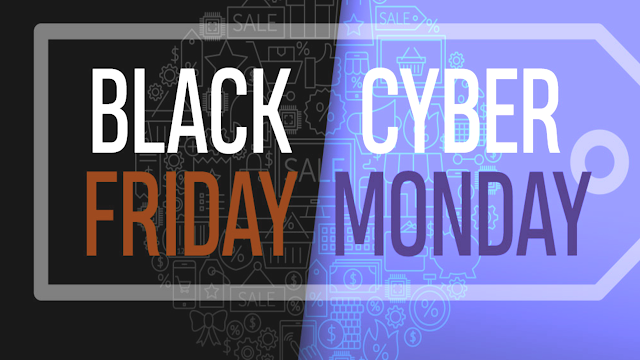
November 27 is Black Friday and November 30 is Cyber ​​Monday

One of the strongest sales campaigns in shops and online sales recently established in Spain is Black Friday and Cyber ​​Monday. A tradition...